
Quality car care is not just about the aesthetic pleasure of a glossy body; it is a direct investment in the residual value of your vehicle.
Quality car care is not just about the aesthetic pleasure of a glossy body; it is a direct investment in the residual value of your vehicle. Unfortunately, even experienced drivers often make critical blunders that lead to premature aging of materials and expensive repairs. In this article, we will break down how to avoid typical pitfalls and keep your car in mint condition using professional approaches.
Drivers often try to save time or money but end up with the opposite effect. The most common car care mistakes begin with using inappropriate equipment.
Another problem is ignoring an aggressive environment. Bird droppings, tree sap, or road reagents eat into the coating within days. If car care is not provided in time, irreversible chemical burns remain on the lacquer, which even deep polishing cannot remove.
To keep your vehicle looking flawless, we recommend a systematic approach. Proper car care is based on three "pillars": regularity, high-quality car detailing products, and the correct execution technique.
Two-phase washing: first, a touchless rinse of primary dirt, followed by a manual wash with special shampoo and a microfiber wash mitt.
Surface protection: using waxes or sealants creates a hydrophobic barrier.
Attention to detail: cleaning the wheels, rubber seals, and caring for the headlights.
For those using car leasing, this approach is mandatory, as the perfect condition of the car upon return is your financial security.

Leather is a demanding material; it requires hydration and UV protection. The biggest mistakes in leather interior care occur when using household wet wipes or aggressive cleaning agents.
Effective leather care should include delicate cleaning with a special soft-bristle brush followed by the application of a leather conditioner. This preserves the material's elasticity and prevents pores from getting clogged with dirt.
Appearance is the owner's "calling card." For a long-lasting effect, we recommend paint protection film (PPF). It is the most reliable way to protect the front of the body from chips and scratches. If film is not in your plans, an alternative is a ceramic coating, which enhances gloss and protects the paintwork from sun fading.
Professional car exterior care also includes regular inspections for corrosion. Even a microscopic scratch left unattended can turn into a rust spot. In such cases, spot paint restoration by specialists is necessary.
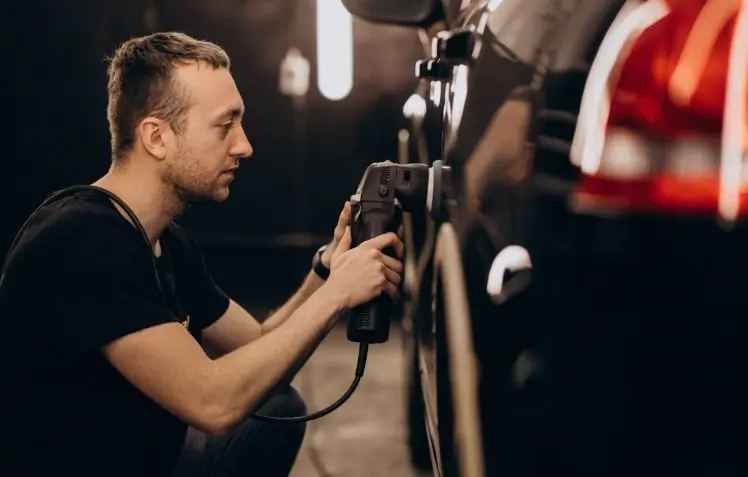
Over time, the lacquer becomes dull, and "swirl marks" from car washes appear. Professional body polishing can fix this. This is not just about adding shine, but about removing a thin damaged layer of lacquer, restoring the car's original look.
As for the interior, deep cabin cleaning should be performed at least twice a year. Dust accumulates in hard-to-reach places where a standard car vacuum cannot cope. A "tornador" or a steam generator is used for these purposes. If you plan a car sale after leasing, perfect cleanliness inside will be a strong argument for the buyer.
To companies choosing operating leasing or econom leasing, we always remind ourselves: a well-maintained car is not just about comfort, but also your business image.
For safe care of your leather car interior, use special leather cleaning foams with neutral pH. They effectively remove dirt and dust without drying out the leather or damaging its protective layer.
A basic car care kit includes: glass cleaner, bug and tar remover, and high-density microfiber cloths. These products help keep your car interior and exterior clean quickly and safely, without risking surface damage.
Use a car vacuum with narrow crevice attachments, cleaning from top to bottom — from the dashboard and seats to the floor. This prevents dust from settling on already cleaned surfaces and keeps your leather car seats in perfect condition.
No. Household chemicals can dry out leather and damage plastic surfaces. For a leather car interior, always use special automotive cleaners and conditioners to keep the material elastic and well-maintained.
The main mistake is the lack of regular leather conditioning. Without proper moisturizing, leather loses elasticity, dries out under sunlight and temperature changes, and quickly cracks under passenger weight.


